
My Year in Books
This week it’s all about books. It’s not a record of what I’ve read in 2023 or even of the ones I’ve liked. No, it’s more about the ones I want to press into your hands and say have a look at this and the reason I want to tell you about it is different with every book. The only thing they have in common is that they have stayed with me long after reading the last page.
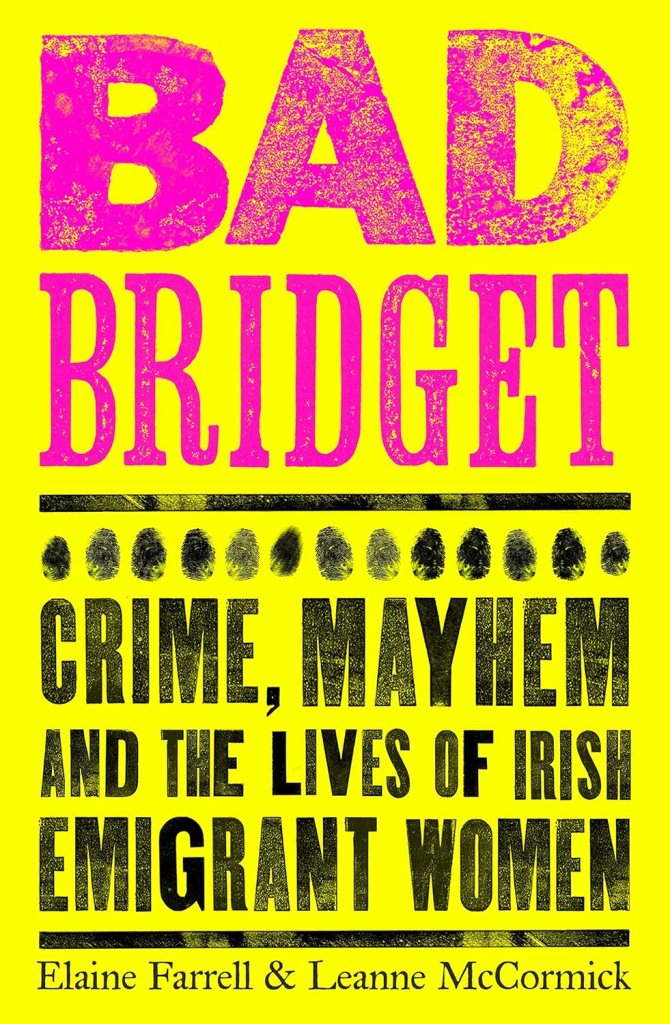
My reading year didn’t get off to a great start as I was ill for the first few months unable to concentrate on anything much beyond Escape to the Country on daytime TV. (It’s very soothing with its magnolia walled houses and green fields, especially as I have absolutely no desire to to swap city life for spectacular views and a three mile trip to buy a newspaper.) My cousin sent me this to cheer me up. It did. Once I was well enough to get past the title, I discovered it was also the book I wanted to read more than anything else.
I studied History and Irish Studies for my first degree and as you can imagine emigration and migration was a hugely important element. One of the unusual aspects of the movement of Irish people to America in the 19th century is that for certain periods single women dominated the Irish statistics. In most other communities it was either single men who left home or entire families fleeing persecution or famine. And we can see that pattern mirrored in the camps at Calais and the terrifying journeys made by refugees today.
There’s a good reason for that – sole women travellers are more vulnerable. We don’t need a history book to discover that when it’s part of every woman’s lived experience whether home is a Cincinnati suburb or a rented room in Exeter.

So why were Irish women different? Time and time again I heard and read that they could be trusted to go as they would keep in touch with the family and continue to conform to the strict moral codes that governed their upbringing. Yes, but none of that gave them protective super powers.
Or perhaps we should think of them as heroes, unwilling to accept the little that post-famine Ireland offered and striving to make a better life for themselves. I remember Hasia Diner mentioning in Erin’s Daughters in America that the largest transatlantic non-governmental movement of money in the 1800s was Irish women sending hard-earned dollars back home. Some of it might have been to put a roof on the family house, but it’s thought most was sent to pay for a sister to join them in America, quite literally sisters doing it for themselves.
There’s a lot of truth in both views but it does put a gloss on things. It’s saying they’ll be grand, don’t worry about them, they will find their feet and make success of it. Bad Bridget takes the gloss off. Some women were knocked off their feet before they even landed. Many struggled to find work and accommodation when they arrived in a bewildering new world and survival sometimes meant turning to crime or sex work.
There were a lot of Bad Bridgets. During the early 1860s in New York, the female prison population comprised of 86 per cent Irish women. For some the American Dream became an American nightmare.
It’s a disservice to generations of Bridgets, good or bad or plain unlucky, to pretend their journey was ever easy.
This is an important and accessible book that is backed up by rigorous academic research. Oddly enough it cheered me up while I was recovering. It’s always good to hear from women who have been voiceless. In drawing from the archives of various prisons, newspapers, and institutions, the Bad Bridgets are allowed to speak for themselves. It’s about time.
Bad Bridget
by Elaine Farrell and Leanne McCormick,
Published by Sandycove 2023
bookshop.org
Amazon UK
Easons
Picture credit: Scene on the steerage deck of steamer “Germanic” from a sketch by a staff artist, Frank Leslie’s illustrated newspaper, 1887 July 2, pp. 324-325. Via Library of Congress.
3 comments on “My Year in Books”
Leave a comment
Over 125 reviews & 280 ratings on Amazon
A Good Confession

"Unputdownable" Miriam Stoppard


 BRIDGET WHELAN writer
I love everything about this post, most especially the background to how you received this book and what it did to lift your spirits. The power of a good book! Oh, and the ESCAPE TO THE COUNTRY bit gave me a chuckle.
LikeLike
Thank you, Glen. I’m very fond of Escape to the Country, the rolling hills melding with the rolling tones of the presenter .
“A green thought in a green shade… ” and everyone with hundreds of thousands to spend. It’s very soothing
LikeLike
I watch that show on repeat in Australia. I too would describe it as ‘soothing’. I see it’s now in it’s 24th season.
LikeLike