
Do you know where Dickens got the character Scrooge from? It was a bit of mistake actually…
It is clear from any Dickens’ novel that the great man enjoyed names. His friend and biographer, John Forster, said that Dickens made “characters real existences, not by describing them but by letting them describe themselves.” You can find a comprehensive list of all Dickens’ characters HERE a website devoted to anything that could be described as Dickensian.
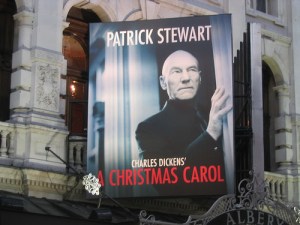
But it was at another useful blog, Bookshelf run by Alexander Atkins, that I discovered the origins of Scrooge. Dickens, never without a notebook, collected real names for his novels and short stories. In June 1841 he was walking around Edinburgh when he saw a gravestone in Canongate Kirkyard to Ebenezer Scroggie. Dickens misread the epithet beneath and thought it said mean man. He wrote in his diary: ‘it must have shrivelled Scroggie’s soul to be remembered through eternity only for being mean. It seemed the greatest testament to a life wasted.’ And that’s how probably the most famous fictional character was born.
Oh! But he was a tight-fisted hand at the grind-stone, Scrooge! a squeezing, wrenching, grasping, scraping, clutching, covetous, old sinner! Hard and sharp as flint, from which no steel had ever struck out generous fire; secret, and self-contained, and solitary as an oyster. The cold within him froze his old features, nipped his pointed nose, shrivelled his cheek, stiffened his gait; made his eyes red, his thin lips blue; and spoke out shrewdly in his grating voice. A frosty rime was on his head, and on his eyebrows, and his wiry chin. He carried his own low temperature always about with him; he iced his office in the dogdays; and didn’t thaw it one degree at Christmas.
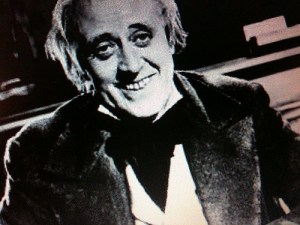 But the stonemason hadn’t carved a cruel description. Ebenezer Lennox Scroggie was described as a meal man on his grave – he was a grain merchant and a succesful one too, well known for his generosity. He was also a bit of a…Victorian society probably would have called him a cad. He had a child with a servant and once interrupted the General Assembly of the Church of Scotland by grabbing the buttocks of a titled lady during a debate.
Not much of the Scrooge about him.
photo credit: tnarik via photopin cc
photo credit: jypsygen via photopin cc
If you would like to keep up to date with submissions, competitions and other writerly news sign up for my newsletter HERE
23 comments on “Do you know where Dickens got the character Scrooge from? It was a bit of mistake actually…”
Leave a reply to Norah Cancel reply
Over 125 reviews & 280 ratings on Amazon
A Good Confession

"Unputdownable" Miriam Stoppard


 BRIDGET WHELAN writer
Reblogged this on Chris The Story Reading Ape's Blog….. An Author Promotions Enterprise! and commented:
Bridget found this fascinating little gem 😀
LikeLike
Thanks for reblogging Chris
LikeLiked by 1 person
Very welcome Bridget – great article 😀
LikeLike
What a delightful story! That is soooo funny! I’ve always been amused at my successful application to a course about teaching reading by misreading the information! I’m in great misreading company! 🙂
LikeLike
You’re in very good company, Norah. Now I’m getting older I mis-hear quite often as well & that can produce some imaginative results….
LikeLiked by 1 person
Oh, I know! I know!
LikeLike
Reblogged this on mira prabhu and commented:
The true origins of Dickens’ mean character Scrooge…”Oh! But he was a tight-fisted hand at the grind-stone, Scrooge! a squeezing, wrenching, grasping, scraping, clutching, covetous, old sinner!” Thanks Bridget Whelan and Chris Graham!
LikeLike
Thanks for re-blogging Mira.
LikeLike
Thanks Bridget. That information is both funny and facinating. 🙂
LikeLike
Appreciate you taking the time to let me know that you liked it…
LikeLike
Brilliant bit of research Bridget loved it! Sent me off at a tangent remembering my early happy hunting ground Highgate Cemetery, where once I was lucky enough to be taken to find Elizabeth Siddal’s grave. It was so overgrown at the time that it was nearly impossible to find. It was said that on opening the grave for Rossetti to retrieve his poems, it was found to be full of her red hair. I like to think this was true.
LikeLike
Can’t take the credit for the research. As I mentioned above I found the story on Bookshelf – https://atkinsbookshelf.wordpress.com/2012/02/07/what-is-origin-of-scrooge/ Fascinating blog. I think you’d love it. Also love your story about Highgate – now there’s a place with many stories to tell…
LikeLike
A most diverting story, and a quote that sets high standards in the specific bodily reflections on character!
LikeLike
Love the quote too and it’s a model for the rest of us to follow, even if far, far behind…
LikeLike
Interesting post, loved the history and back story. As a fan of all things Dickens, this was right up my alley.
LikeLike
Glad you like it as much as I do…
LikeLike
Hi Bridget: Thanks for including reference to Bookshelf in today’s post. Small correction: it is Alexander (not Anthony) Atkins. Best wishes for a great New Year. Cheers. Alex
LikeLike
Doh! Sorry about getting your name wrong – a very basic mistake. I’ve corrected it in the text now, but I’d like to take this opportunity to say how much I enjoy your blog. Never less than fascinating.
LikeLike
No worries. Thank you for your kind comment about Bookshelf — it is hearing from readers and reading other bloggers like yourself that keeps me inspired. Cheers. Alex
LikeLike
Reblogged this on BEHIND THE STORY and commented:
A few days ago I blogged about “A Christmas Carol” and how Dickens’ novella influenced the way Christmas is celebrated today. This evening I came upon Bridget Whelan’s blog about the story behind Dickens’ choice of Ebenezer Scrooge for the miser at the center of his tale and the misunderstanding behind it.
LikeLike
What a fascinating story!
I reblogged it on http://nickichenwrites.com/wordpress/writing/dickens-a-christmas-carol-enjoying-dinner-theater-in-indiana/ It’s a good follow-up to the post I published on Sunday: “Dickens’ A Christmas Carol: Enjoying Dinner Theater in Indiana.”
LikeLike
Thanks for re-blogging. Interesting to read in your post that Dickens didn’t make much money out of one the most popular novellas ever published. I wonder why production costs were so high.I did read that we owe our impression of what a real Christmas should be like to the fact that there was an unusual cold period in the UK in first decade of the 19th century. It means that when Dickens was a boy it snowed every year on Christmas day and it is those childhood memories he took into his stories. Can’t remember the source though…. I’ll try to find it.
LikeLike
Pingback: *press it* Do you know where Dickens got the character Scrooge from? It was a bit of mistake actually… #14 | Its good to be crazy Sometimes