
I Have Fallen in Love With The New Irish Passport
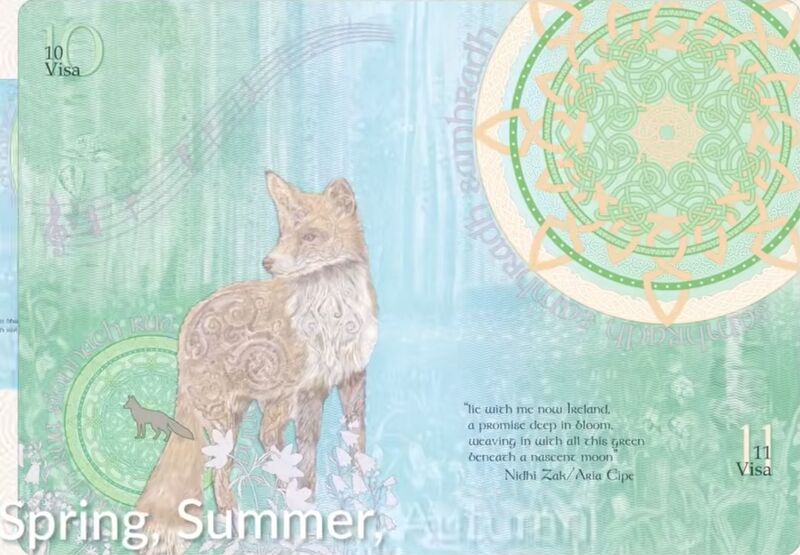
The 2026 design celebrates the wildlife, landscapes and seasons of Ireland, and includes poetry in Irish and English by Eavan Boland, Biddy Jenkinson, Thomas Beggs and Nidhi Zak/Aria Eipe.
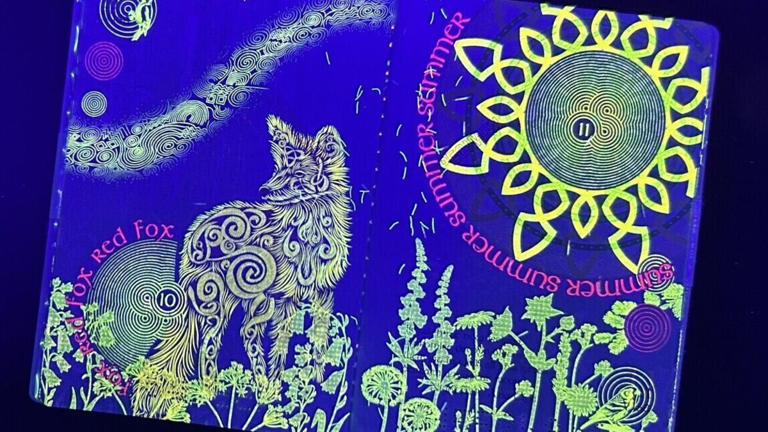
The new passport is apparently one of the world’s most advanced travel documents with metallic and temperature-changing inks and hidden illustrations. I love the idea of the inks, they sound very James Bond.
I haven’t seen one in real life yet but it look absolutely beautiful in this video and takes on special qualities when viewed under UV light.
Of course, as I like words more than anything else, I’m especially interested in the short snatches of poetry included. To be honest, I only know of one the poets and that is Eavan Boland. So, for my own sake as mush as yours, dear reader, I’ve included short biographies and links that will lead you to find out more. This passport is an education in itself.
Nidhi Zak/Aria Eipe is an Irish poet and pacifist who was born in India, and grew up across the Middle East, Europe and North America, before making Ireland her home. She is the author of two poetry collections, both published by Faber & Faber, and has won many awards. Find out more about her and her work HERE It is only because of her post on LinkedIn that I found out about the way poetry and art and nature have been celebrated in passport form.
Biddy Jenkinson (a pseudonym) is an Irish poet, short story writer and dramatist. Now in her 70s, she was born in Dublin and has published several collections of verse as well as short stories and plays, all of them in Irish. She has resisted the expectation that her work should be translated into English. You can read and listen to some of her work HERE.
Thomas Beggs (1789 – 1847) is a Ulster-Scots poet known as the weaver poet but he could perhaps just as well as be called the poet of the unemployed because he spent long periods unable to find any kind of work. Born in County Antrim, he went to sea in his youth but being shipwrecked seems to put him off that career and later he worked in the linen industry and in bleach factories, off and on, at a time of enormous change and disruption. Here’s a video about the weaver poets and a reading of The Auld Wife’s Address To Her Spinning Wheel. Many weavers and spinners must have said that ‘black was the day when they made the machine’. First published at the age of 30, Beggs died of typhus during the famine.
Eavan Boland (1944 – 2020) poet, author and academic I’ve quoted from her twice already on this website Here and Here. She was still a student when she was first published and she describes what it was like when she was starting out.
“I began to write in an Ireland where the word ‘woman’ and the word ‘poet’ seemed to be in some sort of magnetic opposition to each other. Ireland was a country with a compelling past, and the word ‘woman’ invoked all kinds of images of communality which were thought to be contrary to the life of anarchic individualism invoked by the word ‘poet’ … I wanted to put the life I lived into the poem I wrote. And the life I lived was a woman’s life. And I couldn’t accept the possibility that the life of the woman would not, or could not, be named in the poetry of my own nation.”
And now three out of the four poets chosen to appear in the new passport are women. I think Eavan Boland would take some satisfaction from the fact that none of the writers of the articles I read thought it noteworthy enough to mention. We have come a long way.
3 comments on “I Have Fallen in Love With The New Irish Passport”
Leave a Reply

Over 125 reviews & 280 ratings on Amazon
A Good Confession

"Unputdownable" Miriam Stoppard


wow, these are stunning –
LikeLike
Makes you want to have an Irish passport….? (I have one already, but the old one wasn’t nearly as creative.)
LikeLiked by 1 person
this one is super cool
LikeLike